Phone:
(701)814-6992
Physical address:
6296 Donnelly Plaza
Ratkeville, Bahamas.

Phone:
(701)814-6992
Physical address:
6296 Donnelly Plaza
Ratkeville, Bahamas.

You might wonder why BDSM attracts so many curious minds. Exploration, trust through communication, and the thrill of breaking taboos often spark your interest. Curiosity grows when you see BDSM in pop culture, talk with partners, or notice your own preferences. Psychological and biological factors also play a role. For example, studies show that pain and pleasure share common pathways in the brain, and both emotional experiences and past events can influence your interest.
| Evidence Type | Description |
|---|---|
| Biological Processes | Hormonal and neurological mechanisms drive responses during and after BDSM play. |
| Psychological Factors | Research links childhood trauma to BDSM interest, but findings remain complex and mixed. |
| Pain and Pleasure | Pain and sexual pleasure share neurological pathways, supporting a biological basis for BDSM. |
Take a moment to reflect: What draws you to new experiences, and how do you satisfy your own curiosity?
Curiosity often leads you to explore new experiences. You might ask yourself why BDSM attracts so many people who want to learn more. The answer involves several factors. Exploration, trust, and taboo play important roles. Psychological and social influences also shape your interest. Experts now view consensual BDSM activities as a common and healthy form of intimacy. Consent and emotional connection matter most in these practices.
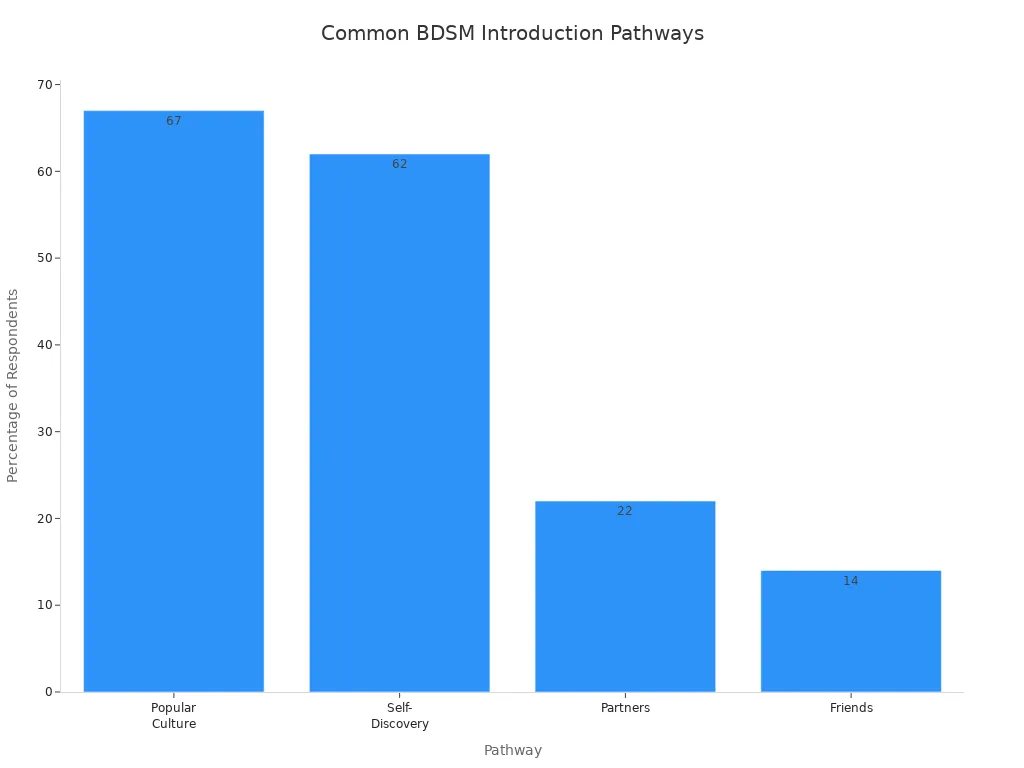
Many people discover BDSM through different pathways. Research shows that exposure happens in several ways. You might see it in movies, hear about it from friends, or talk about it with a partner. Sometimes, you find your own interest through personal exploration.
Popular culture often sparks curiosity. You may notice references to BDSM in films, TV shows, or music videos. These portrayals can make you wonder about the reality behind the fantasy. According to surveys, 67% of respondents first learned about BDSM through popular culture.
| Pathway | Percentage of Respondents |
|---|---|
| Popular Culture | 67% |
| Self-Discovery | 62% |
| Partners | 22% |
| Friends | 14% |
Tip: You can find discussions about BDSM on platforms like Reddit and educational sites such as The National Coalition for Sexual Freedom.
A high school student named Alex watched a popular streaming series that featured a respectful portrayal of BDSM. This sparked questions and led Alex to research more about consent and boundaries. You might relate to this experience if you have ever felt curious after seeing something in the media.
Sometimes, a partner introduces you to BDSM. Open communication and trust help you explore together. About 22% of individuals report that their partner played a key role in their introduction. For example, Jamie and Taylor started discussing fantasies and boundaries early in their relationship. They learned about negotiation and consent by reading articles and joining online forums. You can find similar stories on social media platforms, where couples share their journeys and advice.
Personal preference drives many people to explore BDSM. You may feel drawn to new sensations or want to understand your own boundaries. Self-discovery accounts for 62% of introductions. For instance, Morgan realized an interest in power dynamics after reading articles about emotional safety. Morgan joined online communities to learn more and connect with others who share similar interests.
A 2017 study found that approximately 1 in 5 Americans has engaged in bondage play. Interest in BDSM is widespread, and interactions are influenced by psychological, social, and biological processes.

Curiosity drives you to seek new experiences and understand yourself better. BDSM Attracts many people because it offers a structured and safe environment for this kind of exploration. You can discover new sensations, test your boundaries, and learn more about your desires in a space that values safety and communication.
You might wonder how people keep BDSM safe. The community follows clear safety protocols to protect everyone involved. The SSC framework—Safe, Sane, and Consensual—guides most activities. This means you use equipment and techniques that prevent harm, make sure everyone is mentally able to make decisions, and get clear agreement for each activity.
Sensation play is a big part of BDSM. You might try spanking, wax play, or sensory deprivation. These activities encourage you to talk openly with your partner and experiment with different sensations. Aftercare, which happens after a scene, gives you comfort and emotional support. This step helps build trust and ensures everyone feels good about the experience.
Tip: Always discuss your limits and safe words before you begin. You can find more safety tips and community guidelines on The National Coalition for Sexual Freedom and Reddit’s BDSM Community.
Exploring BDSM lets you step outside your comfort zone, but you do it at your own pace. You decide what feels right for you. Setting boundaries and using safe words help you stay in control. You can always stop or change an activity if it becomes uncomfortable. This approach empowers you to express your needs and adjust your boundaries as you learn more about yourself.
BDSM can help you grow as a person. Research shows that people who participate in BDSM often experience personal development, better emotional control, and deeper sexual discovery. You might find that your relationships become stronger because you practice open communication and trust. Many people also join online communities to share resources and learn from others, which can help you understand your identity and social connections.
Trying new sensations is one of the most exciting parts of BDSM. You might feel a sense of adventure, freedom, or stress relief. Many participants report positive emotions and greater self-expression after exploring new activities.
| Impact of BDSM on Self-Awareness | Percentage |
|---|---|
| Personal Freedom | 90% |
| Adventure | 91% |
| Self-Expression | 91% |
| Stress Relief | 91% |
| Positive Emotions | 97% |
| Pleasure | 99% |
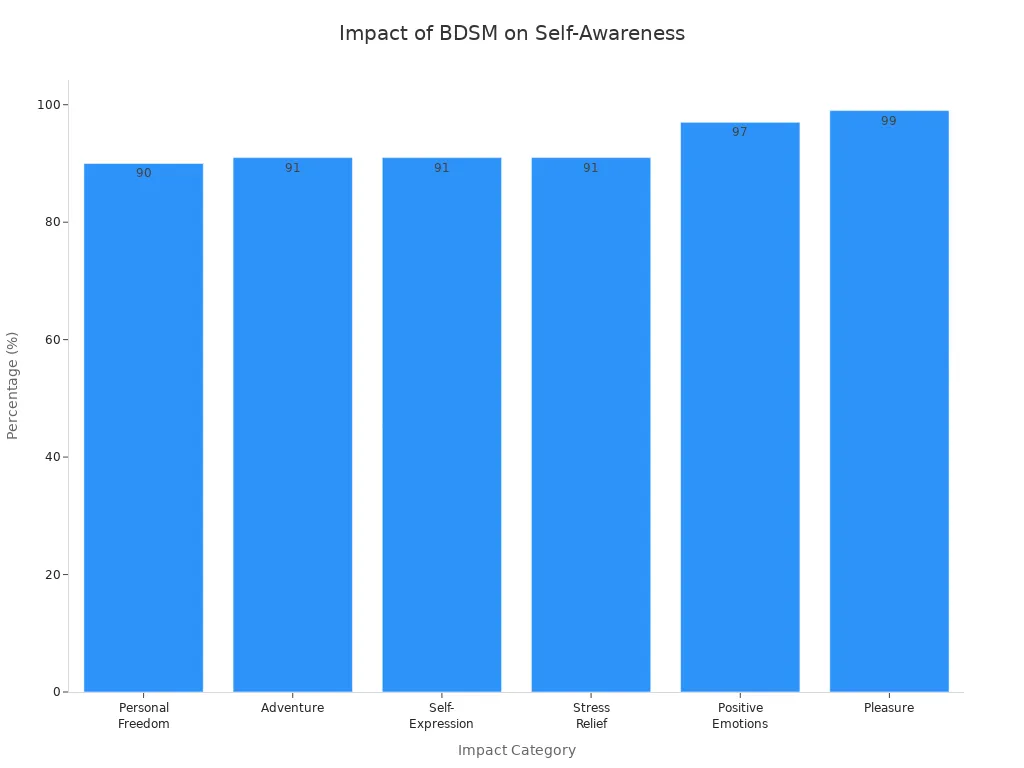
You might notice that trying new things in a safe environment can boost your confidence and help you manage stress. Many people say that BDSM Attracts them because it offers a unique way to experience pleasure and personal freedom.
Note: If you want to learn more about safe exploration and self-discovery, you can visit educational resources like Scarleteen’s BDSM Basics or join supportive online forums.

When you explore BDSM, you quickly learn that trust and consent form the foundation of every experience. These principles set BDSM apart from other types of relationships and ensure that everyone feels safe and respected.
Consent is not just a formality in BDSM. It is the core value that guides every interaction. You and your partner must agree on what will happen before any activity begins. This process involves open communication and a shared understanding of boundaries.
| Key Points | Description |
|---|---|
| Role of Consent | Consent is central to BDSM, distinguishing it from abuse. |
| Mutual Informed Consent | All parties must agree to the activities involved. |
| Safety Precautions | Emphasis on safety measures to protect participants. |
| Community Education | The BDSM community promotes understanding and etiquette around consent. |
Negotiation happens before any scene or activity. You and your partner discuss what you want to try, what feels off-limits, and what safety measures you need. For example, you might talk about using a safe word, setting time limits, or agreeing on aftercare steps. Some people use written checklists or online resources to help guide these conversations. You can find negotiation guides and sample checklists on educational platforms and community forums.
Check-ins are essential during and after a scene. You might pause to ask, “How are you feeling?” or use a simple traffic light system—green for go, yellow for slow down, red for stop. These moments help you adjust the experience and make sure everyone feels comfortable. After a scene, you can talk about what worked, what did not, and how you both felt. This feedback builds trust and helps you grow together.
BDSM Attracts many people because it fosters a unique kind of emotional intimacy. You build trust by sharing your desires and vulnerabilities with your partner.
In BDSM, trust is the bedrock upon which any relationship stands, requiring immediate and profound levels of trust from the outset. Participants must believe that their partner will respect agreed-upon boundaries and keep them safe, emotionally and physically. In contrast, non-BDSM relationships may not necessitate such explicit discussions or the same level of trust from the beginning, often relying on more implicit understandings of boundaries and consent.
You may notice that sharing your fantasies and boundaries creates a deep emotional bond. Research shows that people who practice BDSM often have secure attachment styles and strong communication skills. These traits help you connect on a deeper level and feel more supported in your relationship. Many participants report that these experiences lead to greater self-awareness and mutual respect.
Vulnerability plays a big role in BDSM. When you trust someone with your boundaries, you open yourself up to new experiences and emotions. Studies reveal that BDSM practitioners show psychological strength and autonomy. This means you can feel empowered, not just exposed, when you share your true self. Online communities and educational sites offer support and advice for navigating vulnerability and building healthy connections.
If you want to learn more about consent, negotiation, and emotional connection, you can visit resources like The National Coalition for Sexual Freedom or join discussions on Reddit’s BDSM Community.
You may feel drawn to activities that society labels as forbidden. When you explore BDSM, you often step outside traditional expectations. This sense of breaking the rules can make the experience more exciting. Many people find that the allure of the forbidden increases their curiosity and desire. Psychology research shows that prohibitions can actually make certain behaviors more appealing. The paradox of taboo means that what you are told not to do often becomes even more attractive.
For example, you might try role play or power exchange because these activities challenge what you have learned about relationships. Some individuals share their stories on social media platforms, describing how exploring taboos helped them understand themselves better. You can find online communities where people discuss their journeys and offer support.
When you participate in BDSM, you help redefine what is acceptable in intimate relationships. You may notice that your views on pleasure, trust, and consent change as you learn more. Many people report feeling empowered when they set their own boundaries and make choices outside of mainstream norms. This process can lead to greater acceptance of diverse identities and desires.
| Attitude Shift | Percentage of Participants |
|---|---|
| Increased Acceptance | 85% |
| Greater Empowerment | 78% |
| Open Communication | 92% |
Note: These numbers reflect trends from surveys of individuals who engage in BDSM practices.
BDSM often involves safe risk-taking. You might feel a rush of adrenaline when you try something new or push your boundaries. This excitement comes from knowing you are in control and that you have agreed on safety measures. Many people compare the feeling to riding a roller coaster or trying a new sport. The thrill comes from the combination of risk and safety.
Safe risk-taking can also provide psychological release. You may find that exploring taboos helps you let go of stress or negative emotions. Some people describe a sense of freedom after a scene, while others feel more connected to their partners. Research suggests that these experiences can improve emotional well-being and self-awareness.
Tip: If you want to learn more about safe risk-taking and breaking taboos, you can join online forums or follow educational accounts on social media. These spaces offer advice, resources, and community support.
BDSM Attracts many curious minds because it offers a structured way to challenge norms, explore forbidden desires, and experience safe risk-taking. You can discover new aspects of yourself while building trust and connection with others.
Curiosity about BDSM often leads you to explore not just new sensations, but also the psychological and biological reasons behind its appeal. Understanding these factors can help you see why so many people find meaning, healing, and pleasure in these experiences.
BDSM can offer you a powerful form of emotional release. Many people describe scenes as a way to let go of stress, sadness, or frustration. You might experience a deep sense of relief or even cathartic crying after a session. Some participants enter a state called “subspace,” where you feel euphoria and a break from everyday worries. This emotional release can help you process feelings that are hard to express in daily life.
Note: You can read personal stories about catharsis and subspace on forums such as Reddit’s BDSM Community.
BDSM can also play a role in trauma processing and emotional healing. You might use “trauma play” to reenact difficult experiences in a safe, controlled environment. This can help you regain a sense of power and control. Many people find that negotiating boundaries and building trust with a partner helps them work through past trauma.
Tip: If you want to learn more about trauma and healing in BDSM, you can find resources on educational sites and support groups online.
Your brain and body respond to BDSM in unique ways. When you experience pain during a scene, your body releases endorphins. These chemicals connect with opioid receptors in your brain, reducing pain and creating pleasure. This can lead to a euphoric state, sometimes called “subspace,” where pain feels pleasurable.
| Neurochemical | Effect During BDSM Play |
|---|---|
| Endorphins | Pain relief, pleasure, euphoria |
| Dopamine | Reward, motivation, satisfaction |
| Serotonin | Mood regulation, emotional balance |
| Cortisol | Stress response, changes during play |
| Endocannabinoids | Pleasure, relaxation |
Some researchers suggest that BDSM taps into deep-rooted biological and social systems. You might find that power exchange and role play reflect ancient patterns of human behavior. These activities can help you explore dominance, submission, and trust in ways that feel both exciting and safe.
For more on the science behind BDSM, you can explore articles from reputable psychology journals or join discussions on educational forums.
By understanding the psychological and biological factors at play, you can see why BDSM attracts so many curious minds. These experiences offer you not just pleasure, but also opportunities for healing, growth, and connection.
BDSM attracts many curious minds because it offers a wide range of practices and welcomes people from all backgrounds. You can find something that fits your interests, whether you want to try new sensations or connect with an open-minded community. This diversity makes BDSM appealing and accessible.
BDSM is not just one activity. You can explore many different experiences. The community encourages you to find what excites you and to do so safely.
Role play lets you step into different characters or scenarios. You might act out a scene where you take on a new role, such as a teacher, student, or authority figure. This practice helps you explore power dynamics and fantasy in a safe space. Many people say that role play gives them a sense of freedom and creativity. You can find inspiration and advice on social media platforms and educational forums, where people share their favorite scenarios and tips for beginners.
Sensation play focuses on exploring how your body reacts to different feelings. You might try using feathers, ice, or gentle touch to discover new sensations. Some people enjoy more intense experiences, like wax play or light spanking. The goal is to learn what feels good and to communicate with your partner about your boundaries. Sensation play can be as gentle or as intense as you want, making it accessible for everyone.
| Practice Type | Description | Popularity (%) |
|---|---|---|
| Role Play | Acting out scenarios and characters | 78 |
| Sensation Play | Exploring touch, temperature, and texture | 82 |
| Bondage | Using restraints for control and trust | 65 |
| Power Exchange | Negotiating dominance and submission | 70 |
Tip: You can join online communities to learn more about different practices and find support as you explore.
The BDSM community values acceptance and self-expression. You will find people who support your journey and respect your boundaries.
You can expect a supportive environment where you feel safe to express your desires. The community often holds workshops and discussions to help everyone learn about consent and safety. People from many backgrounds, including BIPOC and LGBTQ+ individuals, find acceptance here. Community leaders work to address underrepresentation and create spaces where everyone feels welcome. This focus on inclusivity helps you feel seen and respected.
BDSM encourages you to express your true self. You can share your interests without fear of judgment. Many psychologists agree that BDSM is a normal part of human sexuality. People in the community often show strong communication skills and good mental health. Self-acceptance is key, and you will find many others who celebrate their identities openly.
Note: You can find more information and connect with others through educational sites and social media groups dedicated to BDSM.
The diversity of practices and the welcoming community make BDSM a space where you can explore, learn, and grow. Whether you are new or experienced, you will find acceptance and opportunities for self-expression.
You might wonder how exploration, trust, and taboo work together to draw you into the world of BDSM. These three elements create a powerful cycle that keeps your curiosity alive. When you explore new sensations or roles, you step into unfamiliar territory. This process often starts with a simple question: “What would it feel like to try something different?” You set boundaries and talk openly with your partner, which builds trust. Trust allows you to push limits safely and try activities that might seem taboo in other settings.
You do not have to follow a single path. Instead, you can move between exploration, trust, and taboo at your own pace. Each step supports the next. When you trust your partner, you feel safe enough to explore. When you explore, you may discover new taboos that excite you. This cycle keeps your interest fresh and helps you grow.
Tip: Start with small steps. Discuss your interests and boundaries before trying something new. Use safe words and check in with your partner often.
Curiosity acts as your guide in the world of BDSM. You might notice that every new experience leads to more questions and possibilities. This ongoing cycle of discovery keeps you engaged and motivated to learn more about yourself and your desires.
Researchers have found that certain psychological traits help you enjoy this cycle. For example, you may have a secure attachment style, which means you feel comfortable forming close relationships and trusting others. You might also seek out new sensations and thrills, showing a high level of sensation seeking. Many people in the BDSM community use active coping strategies, such as trying new activities or seeking distraction through leisure.
| Psychological Mechanism | Description |
|---|---|
| Attachment Styles | You may have a more secure attachment style, making it easier to trust and connect with others. |
| Sensation Seeking | You likely enjoy novelty and thrill, which keeps you interested in exploring new experiences. |
| Coping Strategies | You often use active coping skills, such as seeking out new activities to manage stress or emotions. |
You can use these traits to your advantage. Try new activities, reflect on your feelings, and talk about your experiences with others. Each time you satisfy your curiosity, you gain confidence and insight. This process helps you understand your boundaries and what excites you most.
BDSM Attracts you by offering a never-ending cycle of exploration, trust, and discovery. You can continue to grow, learn, and satisfy your curiosity in a safe and supportive space.
You can start your BDSM journey by exploring new sensations, building trust through open communication, and breaking taboos. Research shows that these steps often begin in adolescence and grow with experience:
| Key Finding | Description |
|---|---|
| Exploration | Many begin learning about BDSM around age 18, deepening interest by age 20. |
| Trust | Communication and trust lead to stronger connections and fulfillment. |
| Breaking Taboos | Challenging norms helps express identity and personal enjoyment. |
Psychological, social, and biological factors all shape your curiosity. You might reflect on your own interests, try solo exploration, or discuss boundaries with a partner. This process helps you understand yourself and encourages ongoing self-discovery. If you feel curious, keep learning and exploring at your own pace.
BDSM stands for Bondage, Discipline, Dominance, Submission, Sadism, and Masochism. You can explore one or more of these elements based on your interests and comfort level.
You can practice BDSM safely by following clear rules, using safe words, and communicating openly. Always agree on boundaries before starting. Safety and consent come first.
You do not need special equipment to start. Many people use simple items like scarves or pillows. Focus on trust and communication before adding new tools.
Start with an honest conversation. Share your interests and listen to your partner’s thoughts. Use resources or checklists to guide your discussion. Respect each other’s boundaries.
Yes, you can join regardless of your background or experience. The community values acceptance and supports people of all identities. You will find many resources online.
Feeling nervous is normal. You can start slowly and set clear limits. Talk with your partner about your feelings. Take breaks when needed. Your comfort matters most.
Look for educational websites, online forums, or books written by experts. Avoid sources that do not focus on safety and consent. You can also join community groups for support.