Phone:
(701)814-6992
Physical address:
6296 Donnelly Plaza
Ratkeville, Bahamas.

Phone:
(701)814-6992
Physical address:
6296 Donnelly Plaza
Ratkeville, Bahamas.

Have you ever wondered why so many people feel drawn to experiences that push boundaries? You might find yourself curious about what happens when you step outside traditional roles and explore new sensations. BDSM attracts individuals who seek adventure, self-awareness, and a safe space to challenge limits. Surveys show that about 15% of adults express curiosity about trying BDSM practices. Research highlights several psychological factors that drive this interest:
| Psychological Factor | Description |
|---|---|
| Personality Traits | Openness and extraversion often link to increased curiosity. |
| Sensation-Seeking | A desire for intense experiences can motivate exploration. |
| Impulsivity | Strong impulses may lead you to try new activities. |
| Attachment Styles | Relationship dynamics can influence your willingness to explore. |
| Education Levels | Higher education sometimes shapes how you approach intimacy and experimentation. |
Approach this topic with an open mind and respect for personal boundaries.
You may notice that curiosity often grows when you encounter something labeled as “off-limits” or taboo. BDSM attracts many people because it challenges traditional ideas about intimacy and relationships. When you step into this world, you confront social norms that often discourage open discussion about alternative desires. Studies show that stigma around BDSM remains strong, which can make the subject even more intriguing. For example, many adults express interest in BDSM activities but hesitate to participate openly due to fear of judgment. Education and awareness help reduce this stigma, making it easier for you to explore your interests without shame.
BDSM attracts those who want a controlled environment to explore their boundaries. You can negotiate rules, set limits, and use safe words to ensure comfort. This structure allows you to experiment with power dynamics, sensations, and roles without fear of harm. Research suggests that individuals who practice BDSM often report fewer sexual problems and a better understanding of their boundaries. When you know your limits, you gain confidence and improve your overall well-being.
Tip: If you want to learn more about creating safe spaces for exploration, consider visiting reputable educational platforms like The National Coalition for Sexual Freedom.
You might find that BDSM attracts your sense of play and creativity. Many people use role-play, costumes, and scenarios to step outside their everyday identities. This imaginative play lets you explore new aspects of yourself and your partner. For instance, you could take on a dominant or submissive role, or invent a scenario that excites you. These activities stimulate your mind and body, offering a break from routine.
If you crave novelty, BDSM attracts your adventurous side. You may want to try something new, push your limits, or simply experience a different kind of intimacy. Studies reveal that adventure and thrill-seeking drive many people to explore BDSM. For example, a significant number of individuals report that their interest began with a desire to break away from the ordinary. Community engagement also boosts well-being, as you connect with others who share your curiosity.
| Motivator | Description |
|---|---|
| Adventure | Seeking excitement and new sensations |
| Novelty | Desire for experiences outside everyday life |
| Community | Finding support and acceptance among like-minded peers |
You may discover that open-mindedness plays a crucial role in your willingness to explore BDSM. Research shows that people who score high in openness to experience and sensation-seeking are more likely to express interest in BDSM. This trait encourages you to embrace unconventional desires and step beyond traditional boundaries.
| Finding | Description |
|---|---|
| Openness to Experience | Higher scores among BDSM practitioners indicate a tendency toward exploration. |
| Sexual Sensation-Seeking | Strong link to a desire for experimentation and new experiences. |
A global study found that sexual arousal often motivates the transition from fantasy to action. If you recognize and accept your unique interests, you can approach them with curiosity rather than shame. For example, you might join online communities or attend workshops to learn more about safe and consensual practices. These steps help you connect with others and deepen your self-understanding.
Note: Embracing your desires does not mean you must act on every curiosity. Self-awareness and consent remain essential in any exploration.
You may wonder why certain desires emerge in your life. Both nature and nurture shape your interests, including those related to BDSM. Evolutionary theories suggest that these behaviors may have developed as adaptive strategies. For example, power play can signal strength or health, which may influence mate selection. The table below summarizes key aspects from evolutionary research:
| Aspect | Description |
|---|---|
| Proximate Explanations | Immediate causes, such as psychological mechanisms and physiological responses, drive your interest in BDSM. |
| Physiological Mechanisms | Your brain’s opioid system can link pain and pleasure, making some experiences enjoyable. |
| Developmental Processes | Early experiences and sexual conditioning can shape your preferences and attractions. |
| Ultimate Explanations | Some behaviors may offer reproductive or survival advantages, explaining why they persist across generations. |
| Power Play and Sexual Dimorphism | Differences in dominant and submissive roles may reflect evolutionary pressures related to mate selection and social hierarchy. |
| Pain Play and Stress Relief | Consensual BDSM can change how you perceive pain, and social connection during these activities may help with stress relief and partner bonding. |
Biopsychosocial research highlights that your gender identity, hormone levels, and neurological makeup all play a role. Psychological factors, such as openness and extraversion, also contribute. Social influences, including education, upbringing, and cultural background, further shape your interests.
Your brain processes pain and pleasure through overlapping neural pathways. This connection helps explain why BDSM Attracts those who seek intense sensations. When you experience consensual pain, your brain may release endorphins and other chemicals that create feelings of pleasure or euphoria.
The fusion of pain and fear neural pathways with sexual arousal pathways likely started early in life, and disposed you to repeat this pattern later in life. Some individuals are clearly drawn to these practices because they tap into deep emotional scripts, often based on childhood trauma or insecure early attachments.
Research shows that these neurological responses can reinforce your desire to repeat certain experiences. You may find that the anticipation and excitement of BDSM activities activate your brain’s reward system, making these practices highly appealing.
You will notice a wide range of preferences and roles within BDSM communities. Studies identify three main roles: dominant, submissive, and switch. Each role comes with unique personality traits and motivations.
A significant portion of people identify as submissive (38%), dominant (25.4%), or switch (36.6%). These roles often reflect broader patterns in your social life. For example, research finds that individuals who show submissiveness in BDSM may also experience subordination in non-sexual relationships. Your position in these dynamics can relate to your social standing and everyday interactions.
If you want to understand more about these dynamics, you can explore peer-reviewed studies or educational resources focused on relationship psychology and human sexuality.
You have likely noticed how popular media shapes your understanding of intimacy and alternative lifestyles. Over the past decade, mainstream films and books have brought BDSM into everyday conversation. The Fifty Shades of Grey trilogy, for example, sold over 100 million copies worldwide. This series helped normalize BDSM by presenting it in a romantic and accessible way. In a recent survey, 68% of participants agreed that Fifty Shades of Grey made BDSM more acceptable and less taboo.
| Evidence Description | Impact on Curiosity about BDSM Practices |
|---|---|
| Media portrayals in books and films | Normalization and increased acceptance of BDSM practices |
| Focus on consent and agency in literature | Greater public understanding and interest |
You may have seen references to BDSM in commercials or documentaries, which further integrate these practices into mainstream culture. For example, a major mobile carrier featured BDSM in a widely viewed advertisement, and a popular travel show highlighted shibari, a form of Japanese rope bondage.
Your relationships often play a significant role in your decision to explore new experiences. Research shows that 84% of people who try BDSM do so with a sexual or romantic partner. Friends, casual partners, and even strangers can also influence your willingness to participate. The chart below illustrates how different types of relationships impact exploration:
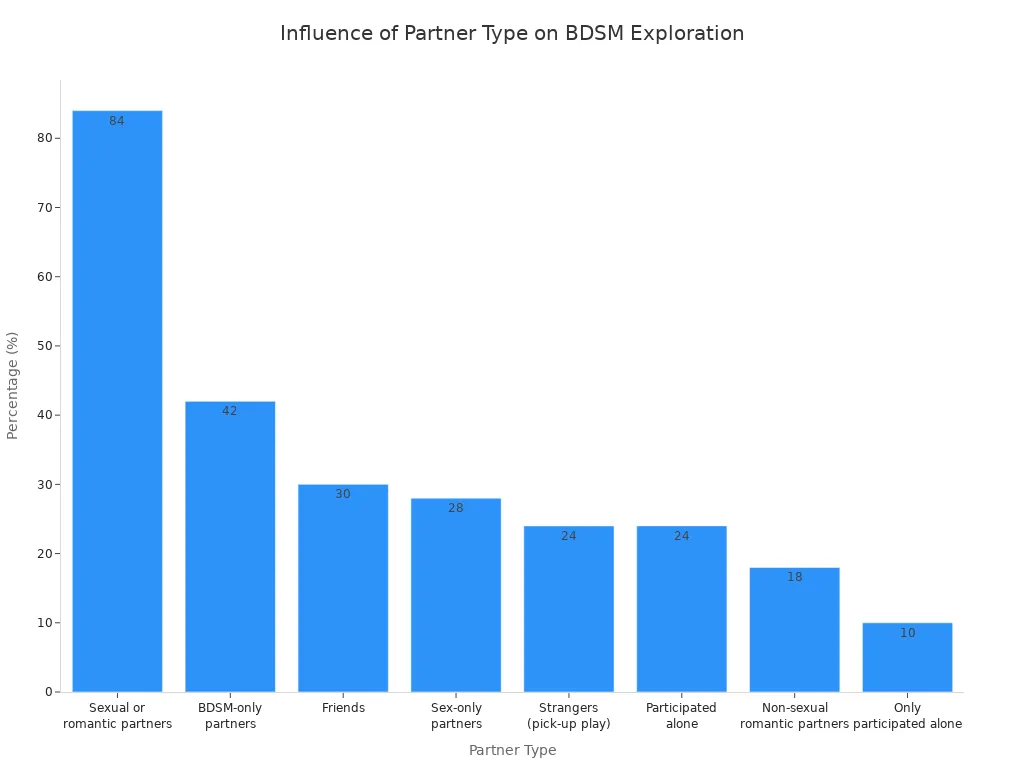
| Partner Type | Percentage (%) |
|---|---|
| Sexual or romantic partners | 84 |
| BDSM-only partners | 42 |
| Friends | 30 |
| Sex-only partners | 28 |
| Strangers (pick-up play) | 24 |
| Participated alone | 24 |
| Non-sexual romantic partners | 18 |
| Only participated alone | 10 |
You might find that open communication with your partner encourages you to discuss fantasies and boundaries. Many couples report that exploring BDSM together strengthens trust and intimacy.
Society’s view of BDSM has shifted dramatically in recent years. Younger generations, especially Generation Z, engage in BDSM at earlier ages. Participation rates vary by sexual orientation, geography, and income. People of Color and individuals who identify as female or transgender often begin exploring BDSM earlier than their White or male peers.
You can see this shift in the removal of BDSM from the DSM-5, which means it is no longer classified as a mental disorder. Consumer culture now embraces BDSM, and you may notice more educational resources and community events available. While some legal challenges remain, the overall trend points toward greater acceptance and understanding.
Note: If you want to learn more about changing attitudes and safe practices, consider visiting reputable organizations such as the National Coalition for Sexual Freedom or following educational accounts on social media.
You may find that exploring BDSM leads to a deeper understanding of your own desires and emotional needs. When you reflect on what excites or challenges you, you begin to clarify your boundaries and preferences. This process often enhances your self-awareness and resilience. For example, you might discover that you enjoy certain power dynamics or sensations, which can help you communicate your needs more clearly in all areas of life.
A recent study found that participants who engaged in BDSM reported increased self-understanding and emotional growth. You can use tools like journaling or guided reflection to track your feelings before and after scenes, which helps you notice patterns and triggers. If you want to learn more about self-awareness, consider resources from The Center for Mindful Self-Compassion.
| Evidence Type | Description |
|---|---|
| Mental Well-Being | BDSM practitioners show no significant differences in psychological distress compared to the general population. |
| Identity Exploration | BDSM provides a safe space for you to explore your identity and desires, leading to greater self-awareness. |
| Emotional Effects | The release of endorphins during play can promote relaxation and emotional well-being, contributing to growth. |
You build trust and intimacy through open communication in BDSM. Before any activity, you and your partner discuss boundaries, limits, and expectations. This negotiation ensures that everyone feels safe and respected. For example, you might use checklists or have regular conversations about what you want to try and what you wish to avoid.
During bondage or other scenes, you may notice a deepening of intimacy. The act can evoke strong feelings of love and protectiveness, encouraging you to be more present with your partner. Aftercare, where you comfort each other post-scene, reinforces the connection and ensures both partners feel valued. You can find more guidance on communication and aftercare at Scarleteen’s Relationships & Communication section.
BDSM Attracts those who seek both vulnerability and empowerment. When you willingly give up control within set boundaries, you can rebuild trust and confront feelings of helplessness. For instance, Claire’s experience shows how controlled power dynamics facilitated her emotional healing. She rebuilt trust and processed difficult emotions by embracing vulnerability in a safe context.
Research indicates that BDSM can serve as a healing experience for trauma survivors. The emphasis on consent and clear boundaries creates a safe environment for you to process emotions and regain control over your body and experiences. Many individuals report that embracing their BDSM identity allows them to live authentically. One participant shared, “Embracing that part of me openly means I can live authentically and so can my partner.” Others have found that BDSM provided a healthier outlet for past trauma, helping them regain sexual agency and experience cathartic healing.
If you want to explore authenticity and empowerment, you can join online forums or attend workshops focused on self-acceptance and emotional growth. Resources like The Trevor Project’s Self-Care Guide offer additional support for personal development.

You can learn valuable lessons about consent from the practices common in BDSM communities. In these spaces, consent is not a one-time agreement. Instead, you treat it as an ongoing conversation that adapts to changing needs and comfort levels. Before any activity, you and your partner discuss boundaries, preferences, and possible risks. This process, known as negotiation, ensures that everyone feels safe and respected. For example, you might agree on a safe word that allows you to pause or stop an activity at any moment.
Research shows that people involved in BDSM are more likely to engage in explicit consent discussions. These conversations happen naturally and frequently, making them a standard part of the experience. In contrast, many non-BDSM relationships lack this level of clarity, which can lead to misunderstandings or discomfort. You can apply these principles to any relationship by making consent an ongoing process and encouraging open dialogue about boundaries.
| Lesson Type | Description |
|---|---|
| Informed and Ongoing Consent | Consent is a continuous dialogue that can be renegotiated or withdrawn at any time. |
| Effective Communication | Open discussions about desires, limits, and concerns are essential for consent. |
| Mutual Respect and Boundaries | Respecting each other’s boundaries is crucial to prevent consent violations. |
| Negotiation Sessions | Participants discuss preferences and limits before engaging in activities. |
| Check-Ins and Safe Words | Regular check-ins during activities ensure ongoing comfort and consent. |
| Risk Awareness | Participants are educated about potential risks and safety protocols. |
| Addressing Consent Violations | Breaches of consent are taken seriously, emphasizing accountability and support. |
| Comprehensive Communication | Detailed conversations about desires and boundaries enhance consent in all interactions. |
| Ongoing Consent | Consent should be an ongoing process, allowing for modifications at any point. |
| Respect for Boundaries | Understanding and respecting limits fosters mutual respect and trust. |
Tip: You can use checklists or written agreements to clarify boundaries, making expectations clear for everyone involved.
BDSM Attracts individuals who value transparency and emotional safety. You can strengthen any relationship by adopting the communication habits found in healthy BDSM dynamics. Partners in these communities engage in open dialogues, negotiating desires and boundaries with honesty. This approach eliminates misunderstandings and builds trust.
For example, you might set aside time each week to talk openly with your partner about your needs and feelings. This habit can transform your relationship, making it more resilient and satisfying.
You may encounter stereotypes about BDSM that paint it as dangerous or unhealthy. In reality, research shows that practitioners often have strong communication skills, clear boundaries, and high levels of trust. By challenging these misconceptions, you can foster greater acceptance and understanding in your community.
Consider the following common myths and the truths behind them:
| Stereotype | Reality |
|---|---|
| BDSM is abusive | Healthy BDSM relies on consent, negotiation, and mutual respect. |
| Only certain people practice BDSM | People from all backgrounds and identities participate in BDSM. |
| BDSM participants lack boundaries | Practitioners often have clearer boundaries and better communication than non-participants. |
Note: When you challenge stereotypes, you help create a more inclusive environment where everyone feels safe to express their authentic selves.

You need to start with education before you explore BDSM. Reliable information helps you avoid risks and misunderstandings. You can find trustworthy guides, articles, and online communities that focus on safety and consent. For example, you might read educational websites that offer step-by-step instructions on negotiation, aftercare, and safe play. Many organizations provide free resources, including checklists and safety protocols.
| Resource Type | What You Learn | Example Link |
|---|---|---|
| Educational Websites | Consent, negotiation, safety basics | NCSF Education |
| Online Communities | Peer advice, real-life experiences | Kink Academy |
| Workshops/Webinars | Hands-on skills, Q&A with experts | Scarleteen |
Tip: Always cross-check information from multiple sources. Look for platforms that emphasize consent and harm reduction.
You should talk openly with your partner before trying any BDSM activity. Honest communication builds trust and prevents misunderstandings. Start by sharing your interests and asking about your partner’s boundaries. Use simple questions like, “What are you curious about?” or “Are there activities you want to avoid?” You can use a checklist to compare interests and limits.
Example Conversation Steps:
Note: You can find sample checklists and conversation guides on educational platforms. These tools help you clarify expectations and ensure mutual understanding.
You must set clear boundaries before any scene. Boundaries protect your physical and emotional safety. Discuss what you want to try, what you want to avoid, and what you feel unsure about. Write down your limits if needed. Use safe words that anyone can say at any time to pause or stop the activity.
| Practice | Description | Example |
|---|---|---|
| Safe Words | Words that signal to pause or stop | “Red” for stop |
| Hard Limits | Activities you never want to try | No choking |
| Soft Limits | Activities you might try with caution | Light spanking |
| Aftercare Plan | Steps for emotional support after play | Hugs, water, check-in |
You should check in with your partner during and after the scene. If anyone feels uncomfortable, stop immediately. Regular check-ins help you adjust boundaries as you gain experience.
Safety first: Never skip negotiation or aftercare. These steps keep everyone safe and respected.
You have seen how BDSM attracts curious minds through psychological intrigue, social influence, and opportunities for personal growth. You can apply these lessons to your own life:
Tip: Stay curious and approach new experiences with respect and an open mind. Growth begins when you explore safely and thoughtfully.
BDSM stands for Bondage and Discipline, Dominance and Submission, Sadism and Masochism. You will find these terms describe a range of consensual practices focused on power exchange, sensation, and role-play.
You can explore BDSM safely by starting with education, open communication, and clear boundaries. Always use safe words and discuss limits before any activity. Begin slowly and prioritize trust with your partner.
You should choose a private, relaxed setting. Share your interests honestly and ask about your partner’s feelings. Use checklists or guides to clarify boundaries. Respect each other’s comfort levels and revisit the conversation as needed.
You do not need expensive gear to start. Many activities use everyday items or focus on communication and power dynamics. If you use equipment, research safety guidelines and inspect items before use.
You can strengthen your relationship through honest communication, trust, and mutual respect. Many couples report deeper intimacy and understanding after exploring BDSM together. The focus on consent and boundaries benefits all relationships.
BDSM includes a wide range of activities. You can focus on sensation, power exchange, or role-play without pain. Many people enjoy emotional connection, trust, and creativity more than physical intensity.
You should discuss limits before any activity. Use safe words, write down hard and soft limits, and check in regularly. Boundaries protect your well-being and ensure a positive experience for everyone involved.
You can find accurate resources through educational websites, online communities, and workshops. Look for platforms that emphasize consent, safety, and harm reduction. Cross-check information and seek advice from experienced practitioners.